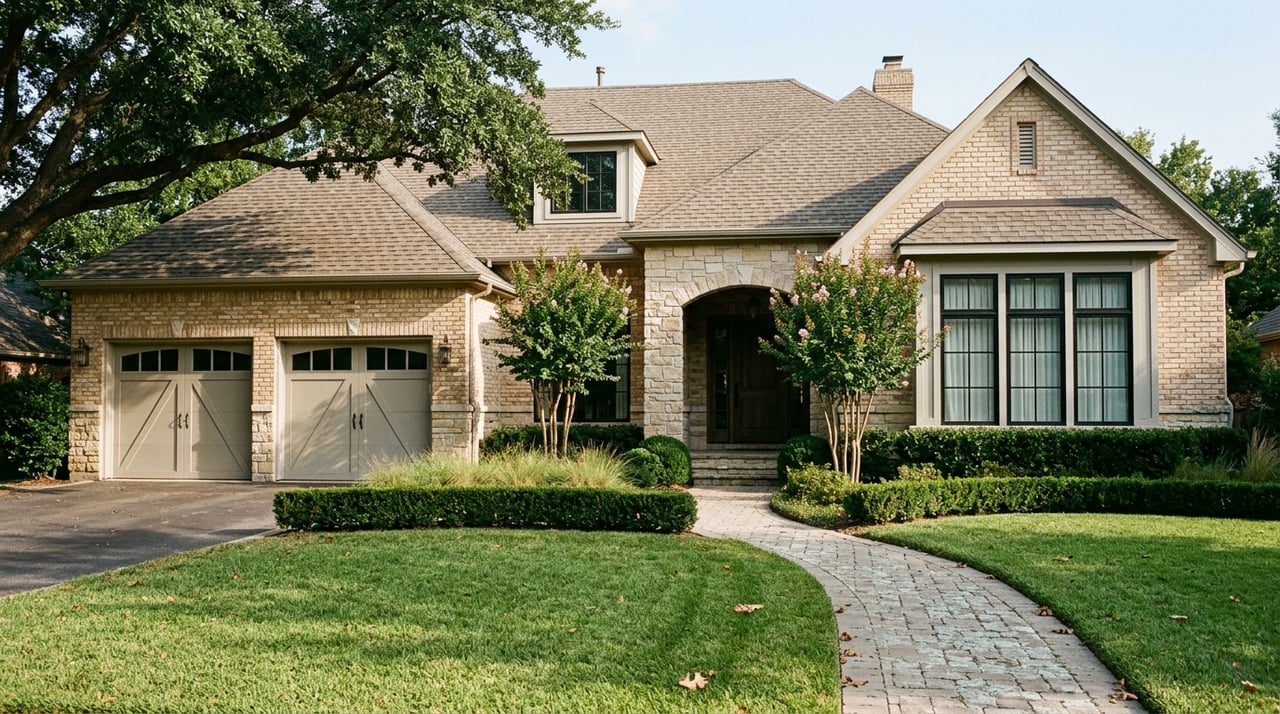
The $375 Document That Can Stall a Chisholm Crossing Closing
August 13, 2026
August 13, 2026
A seller in Chisholm Crossing accepts an offer, clears the inspection, and starts mentally packing boxes. Then, a week before closing, the buyer's agent asks where the HOA resale certificate is. Nobody ordered it. The option period is closing in, and a document most sellers have never heard of is now the thing standing between a signed contract and a delayed one.
This happens more than people expect in Rockwall's established neighborhoods, and it happens for a specific reason: the paperwork is small, but the timing window around it is not.
Under Texas Property Code Chapter 207, any home sale inside a mandatory homeowners association requires a resale certificate before closing. It is not a courtesy document. It is a legal snapshot of where the property stands with the association: whether dues are current, whether any violations are on file, and what the HOA's financial condition looks like. You can read the statute itself directly through the Texas Constitution and Statutes site.
The part that trips people up is the clock. Once a buyer actually receives the certificate, they have a statutory window to review it and, if something in it changes their mind, to terminate the contract. That means the certificate cannot simply sit in a stack of closing documents waiting for someone to get to it. If it arrives late, the review window pushes the whole closing date back with it.
The certificate itself usually costs less than a home inspection. The delay it causes, if nobody orders it early, is what actually costs sellers time and leverage.
Chisholm Crossing is governed by the Chisholm Crossing Homeowners Association, Inc., managed by Principal Management Group of North Texas. The association's resale certificate fee is $375, a figure confirmed in the HOA's own public management certificate filed with the Texas Real Estate Commission and posted at hoa.texas.gov. That filing is a matter of public record, which means any seller or agent can verify the fee and the management contact before a contract is even written, rather than finding out for the first time mid-transaction.
Three hundred seventy five dollars is not a large number on its own. What matters is who pays it and when it gets requested, and that is negotiated through a specific form rather than assumed.
Texas contracts handle this through TREC's addendum for property subject to mandatory HOA membership, commonly called Form 36-10. You can review the form description directly on TREC's site. It exists because the base contract only flags that an HOA exists. It does not decide who requests the certificate or who eats the cost if fees run higher than expected.
Addendum Paragraph | What It Actually Decides |
|---|---|
Paragraph A | Who orders the resale certificate, seller, buyer, or title company |
Paragraph C | A cap on transfer fees and deposits the buyer pays, with the seller covering anything above it |
Paragraph D | Who pays the title company for handling the HOA information request |
Without this addendum attached, there is no agreed framework for any of it. In a straightforward transaction that rarely matters. In a transaction where the certificate arrives late, or reveals an unpaid assessment, it becomes the exact document both sides wish they had settled up front.
Rockwall's citywide numbers as of June 2026 show a median sale price of $540,000, down about 1.5 percent year over year, with homes taking a median of 84 days to sell and roughly 6.7 months of supply on the market. Sale-to-list ratios are still holding near 98.2 percent, but about 56 percent of active listings have taken at least one price cut along the way.
None of those figures describe Chisholm Crossing specifically. They describe the market it sits inside, and that context matters. A market with 84-day medians and rising price cuts is a market where buyers already have room to walk if something during the option period feels uncertain. A late resale certificate, or one that surfaces an unexpected line item, gives a buyer who is already negotiating from strength one more reason to ask for a price adjustment or an extension rather than simply proceeding.
In a faster market, sellers can absorb a few days of paperwork delay without consequence. In this one, every added day of uncertainty is a day a buyer has to reconsider.
Chisholm Crossing is not a new-construction community. It dates to roughly 2005, with homes generally landing in the low three thousand to just over four thousand square foot range, and it operates under a single HOA layer rather than the stacked disclosures that come with some of Rockwall County's newer master-planned developments.
That is a genuine point of contrast worth understanding if you are comparing neighborhoods. Newer communities like Meraki in nearby McLendon-Chisholm carry both HOA dues and a separate MUD tax tied to bond-financed infrastructure, which means sellers there juggle two disclosure tracks instead of one. We broke down how that HOA-and-MUD combination works in McLendon-Chisholm in more detail if you are weighing an established neighborhood against a newer one.
Chisholm Crossing's paperwork is simpler by comparison. But simpler does not mean automatic, and an established, largely built-out neighborhood also means fewer active listings at any given time. When only a handful of homes are on the market in a subdivision, each individual sale carries more weight, and each delay is more visible to anyone watching that street.
For sellers preparing to list in Chisholm Crossing, the sequence that avoids a last-minute scramble looks like this:
None of these steps are complicated. They just have to happen in order, and early, which is the part that gets skipped when everyone assumes the HOA paperwork will sort itself out.
Based on the association's public filing, Chisholm Crossing operates under a standard homeowners association structure. Always confirm current tax district status through your title company, since MUD and PID designations can apply differently parcel by parcel.
There is no automatic answer. It depends on what the buyer and seller agree to in the TREC 36-10 addendum. Without that addendum, the base contract only establishes that the HOA exists, not who covers the certificate cost.
The buyer's statutory review period gives them the right to raise it, request a resolution, or in some cases terminate the contract. This is exactly why reviewing your own account with Principal Management Group before listing is worth the ten minutes it takes.
If you are getting ready to sell in Chisholm Crossing, the paperwork should never be the reason a good offer falls apart. Sarah Naylor and her team walk sellers through the HOA resale certificate, the TREC addendum, and every other step in the Rockwall closing process before it becomes a problem instead of after. Get Your Instant Home Valuation and let's map out your timeline together.
Stay up to date on the latest real estate trends.


Lifestyle




Sarah has strong negotiation skills, professional expertise, work ethic, and intimate knowledge of the Rockwall County area, and her reputation is backed by multiple “Best Real Estate Agent” awards.
Get in Touch With Our Team to Learn More

3125 RIDGE RD ROCKWALL TX 75032