Lakefront Or Inland? Choosing A Home In Rockwall

February 19, 2026

Torn between waking up to Lake Ray Hubbard and the ease of an inland neighborhood? You’re not alone. The good news is you can’t go wrong in Rockwall, but the right choice depends on how you live, what you value day to day, and how you plan to maintain your home. In this guide, you’ll learn the real differences in lifestyle, costs, permits, flood considerations, and resale so you can choose with confidence. Let’s dive in.

Rockwall’s lake context

Lake Ray Hubbard is a major reservoir on the East Fork of the Trinity River that supplies water and supports recreation across the Metroplex. The City of Dallas owns the dam and reservoir and operates it through Dallas Water Utilities for water supply, flood control, and recreation. You can review the reservoir’s history and specifications through the Texas Water Development Board and the City of Dallas. For a quick primer, see the lake’s background from the Texas Water Development Board and Dallas Water Utilities.

Recreation is a big part of local life. Lake Ray Hubbard supports boating and fishing, and shoreline vegetation can shift with seasons, which sometimes affects water clarity and access in certain coves. You can check conditions and fisheries details with Texas Parks & Wildlife.

What “lakefront” means here

In Rockwall, “lakefront” usually means a lot with direct access to Lake Ray Hubbard. Some properties have private docks or boat facilities where allowed, while others rely on access across a leased “take area.” Inland homes sit within a short drive of marinas and launches but do not have private dockage. The City of Rockwall regulates the takeline overlay, subleases, and permits for shoreline improvements. You’ll find the rules and processes explained on the City’s takeline and permitting page.

Lakefront vs. inland lifestyle

Recreation and access

  • Lakefront: You step outside for sunset views, quick fishing, or a spontaneous evening cruise. If your lot and permits allow, you might have a private dock or slip. Even if not, marinas are close by. For example, Harbor Bay Marina on Lake Ray Hubbard offers slips and launch facilities.
  • Inland: You still enjoy the lake, just with a short drive. Many inland neighborhoods focus more on community pools, trails, and parks than on boating. You trade dock paperwork for simpler maintenance.

Home features and outdoor space

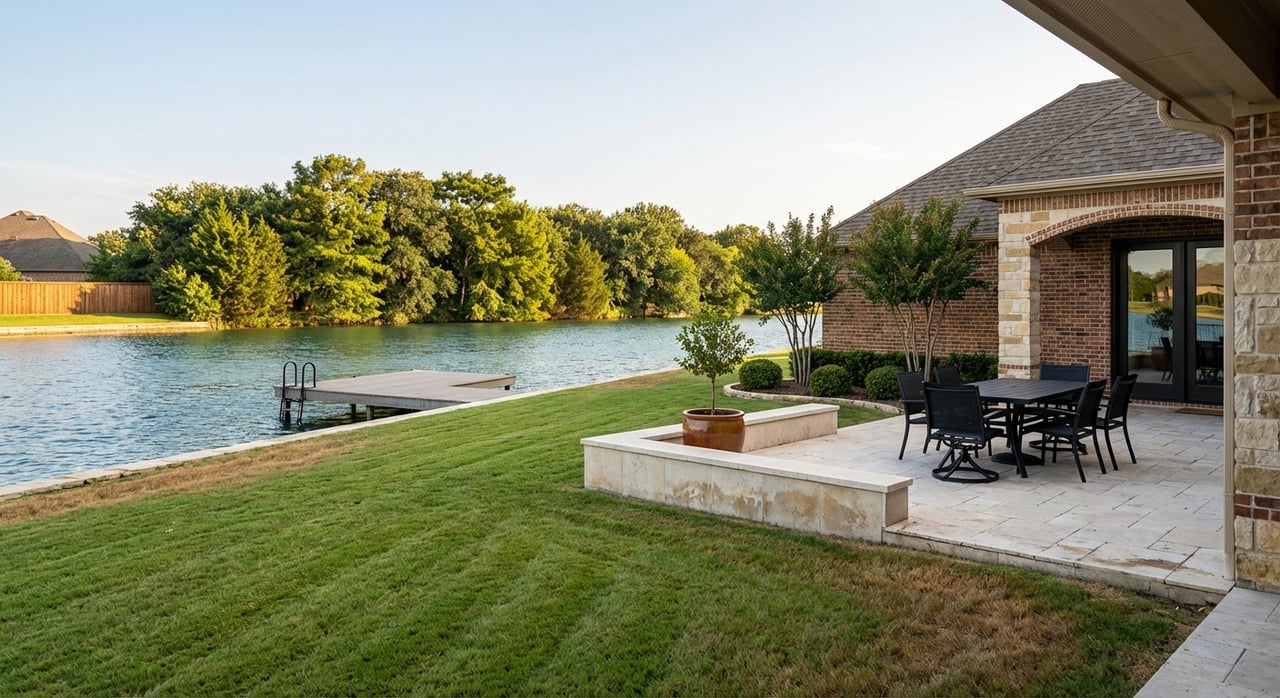
  • Lakefront homes often center on outdoor living with covered patios, multi‑level decks, and water‑oriented storage. Yard lines can meet a city-managed take area, so it’s important to confirm exactly where your private lot ends and what improvements are allowed.
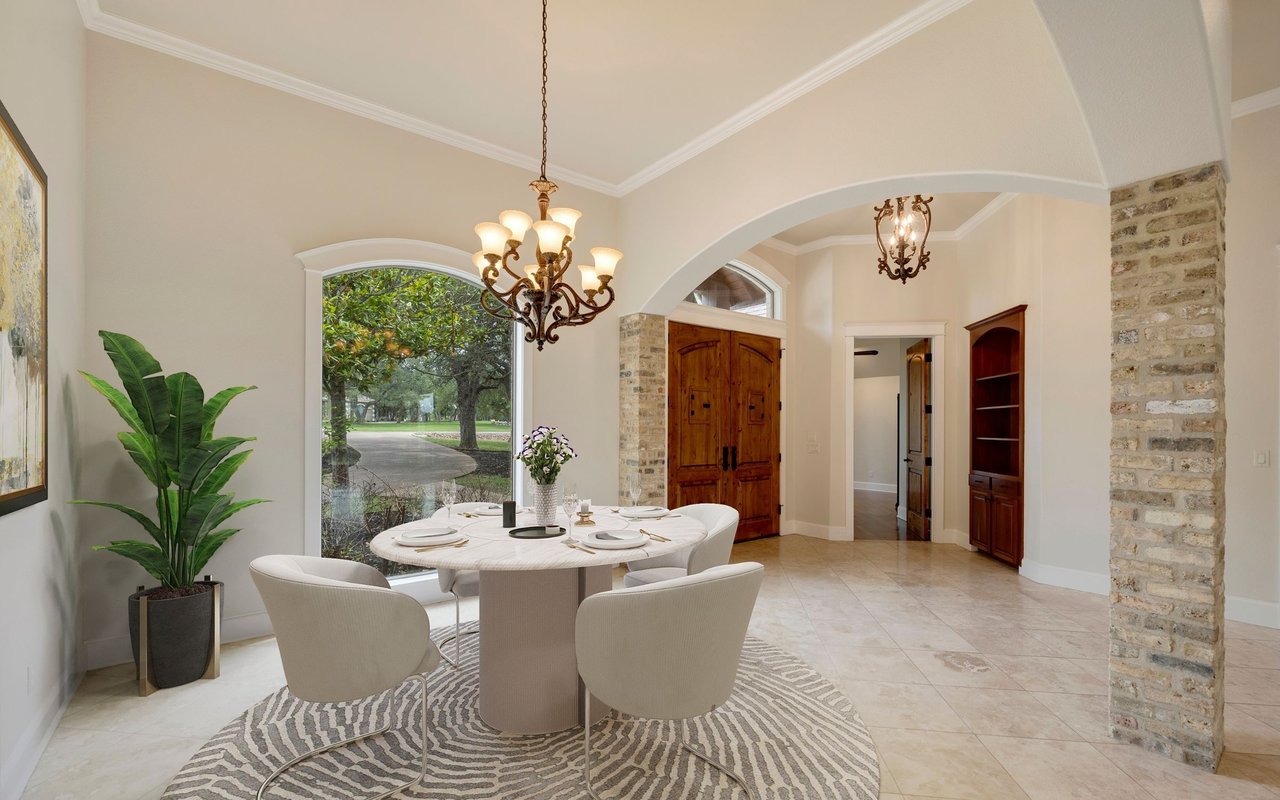
  • Inland homes typically emphasize interior square footage, garages, and standard yards. Newer subdivisions may offer shared amenities instead of private slips.

Weekend activity and noise

  • Waterfront zones can be lively on warm weekends, especially near marinas, lakeside restaurants, and the Harbor entertainment district. Local programming brings evening and seasonal activity to the shoreline, which many buyers enjoy for its energy and convenience. See what’s happening around the Harbor through Visit Rockwall.
  • Inland neighborhoods tend to feel quieter and more residential on busy weekends.

Commute and daily routines

Both lake neighborhoods and inland subdivisions connect to I‑30 and major DFW corridors. Drive times into Dallas can vary widely with traffic, so plan to test your commute during your typical peak hours from the exact neighborhood you’re considering.

Rules and permits that shape ownership

Takeline subleases and city permits

The lakebed and shoreline take area are owned by the City of Dallas, and the City of Rockwall administers local takeline subleases and permits for docks, seawalls, and related work. Before adding or rebuilding a dock or boat lift, you must hold the correct takeline sublease and secure the required permits. Start with the City’s guidance on subleases, fees, surveys, and sealed engineering requirements on the takeline and permitting page.

Tip: Ask whether an existing takeline sublease will transfer at closing or requires additional city approval. Request the current sublease record from the seller.

Docks, seawalls, and shoreline work

Shoreline and dock projects usually require engineering plans, permits, and inspections. Unpermitted work can lead to retroactive compliance costs. During your option period, ask for permit history and inspection reports, plus any invoices for prior seawall or dock work. The City outlines process basics and contacts on the takeline page.

Flood zones and insurance

If any part of a mortgaged property sits in a FEMA Special Flood Hazard Area, lenders typically require flood insurance. You can look up a property’s flood zone on FEMA’s National Flood Hazard Layer. Lender requirements are explained in federal guidance from the FDIC.

Premiums vary based on elevation and other risk factors. The Texas Department of Insurance encourages buyers to get quotes early, and to request elevation certificates when available. Learn more from the Texas Department of Insurance.

Budget planning: what to compare

Lakefront often carries a premium because shoreline is finite. That premium shows up in several ways, so build an apples-to-apples monthly comparison.

  • Property taxes: Lakefront lots can be assessed at higher values, which may increase annual taxes. Review the seller’s tax history for the specific parcel.
  • Insurance: Factor in homeowners insurance and flood insurance if required or recommended.
  • HOA dues: Many lake neighborhoods collect dues that support amenities, shoreline maintenance, and security. Confirm the assessment schedule and any special assessments.
  • Marine structures: Budget for dock, lift, and seawall inspection and upkeep, even if they appear in good shape today.
  • Everyday utilities and yard care: Inland homes may trade dock costs for larger yard maintenance or upgraded interior features.

Resale and appraisal

Waterfront homes can command strong prices because supply is limited, especially for lots with favorable orientation and quality shoreline. That said, the buyer pool can be more specialized. Some buyers avoid dock maintenance or flood concerns, which can make inland homes more broadly appealing.

Appraisals for true waterfront can be complex, since it is harder to find recent, comparable sales. Features like water depth, orientation, permitted improvements, and shoreline condition play a role. Sellers who keep takeline documents, permits, and inspection reports organized help buyers and appraisers evaluate value more clearly.

Your same-day comparison plan

Nothing replaces an in-person feel for sunlight, breezes, and weekend flow. Try this quick plan:

  1. Tour a lakefront home and an inland home back to back on the same day. Note parking, traffic, ambient noise, and how the light moves through key rooms.
  2. Budget-check both options with real numbers. Include taxes, HOA dues, homeowners insurance, flood insurance if needed, and a reserve for dock or seawall items.
  3. Ask for documentation before you waive any contingencies.

Touring checklist: lakefront vs. inland

Ask for these documents up front

  • Current takeline sublease and proof of payment, if lakefront. See the City’s process on the takeline page.
  • Recorded survey showing lot lines, setbacks, and the takeline location. Details are outlined on the City’s takeline guidance.
  • Permits and engineering for any dock, lift, or seawall, plus inspection reports and invoices.
  • Recent elevation certificate if available and any flood-claim history. You can preview mapping via FEMA’s NFHL viewer.
  • HOA documents, including marina or slip rules and assessment history.
  • Seller disclosures and repair history, especially for shoreline or erosion work.

Schedule these inspections during your option period

  • Dock and boat-lift inspection covering structure, pilings, and electrical.
  • Seawall or bulkhead assessment with a contractor’s estimate for any repairs.
  • Standard home inspection with added focus on roof, foundation, and plumbing for older homes.
  • Flood-elevation verification and flood insurance quotes to compare coverage and cost.

Smart questions to ask on site

  • Who holds the takeline sublease and is it current? Will it transfer to you at closing or require city approval?
  • Are there shoreline easements or public access points adjacent to the property?
  • When were the dock and seawall last rebuilt or inspected? Can you review engineering drawings and invoices?
  • If a marina slip is referenced, is it included, leased, or subject to a waitlist? You can compare options at Harbor Bay Marina.

Ready to choose with confidence?

Whether you want coffee on the deck at sunrise or a low-maintenance inland home with quick lake access, the right fit is out there. Tour both styles on the same day, bring the checklist above, and verify takeline, survey, and flood details before you waive inspections or tighten timelines. If you want a local, high-touch guide to line up tours, coordinate marine inspections, and help you compare carrying costs, reach out to Sarah Naylor for a personalized plan.

FAQs

What qualifies a Rockwall home as “lakefront” on Lake Ray Hubbard?

  • In Rockwall, lakefront typically means a lot with direct access to the water, sometimes across a city-managed take area. Improvements like docks require a takeline sublease and permits through the City. Review the City’s takeline guidance.

Can I build or extend a dock on Lake Ray Hubbard?

  • Possibly, but only with the correct takeline sublease and approved permits. Many projects need sealed engineering plans and inspections. Start with the City’s takeline and permitting page.

Do all lakefront homes require flood insurance?

  • Lenders typically require flood insurance if any portion of the mortgaged structure lies in a FEMA Special Flood Hazard Area. Check a property’s zone on FEMA’s NFHL and confirm lender requirements via the FDIC guide.

How busy are Rockwall’s lakeside areas on weekends?

  • Expect more activity near marinas and the Harbor district during warm seasons. Events and dining can draw crowds, which many buyers enjoy for convenience. Explore the scene through Visit Rockwall.

Where can I keep a boat if my home has no dock?

  • You can lease a slip or use launch facilities at area marinas such as Harbor Bay Marina. Always confirm slip availability and waitlists directly with the marina.

What extra costs should I plan for with a lakefront home?

  • In addition to standard ownership costs, include potential dock, lift, and seawall maintenance, HOA dues for shoreline amenities, and flood insurance if required or recommended. Also review property tax assessments for the exact parcel.

We’re here to help you find your dream home

Sarah has strong negotiation skills, professional expertise, work ethic, and intimate knowledge of the Rockwall County area, and her reputation is backed by multiple “Best Real Estate Agent” awards.